Santa Clarita sits at roughly 1,200 feet elevation, part of a valley that channels both Santa Ana winds and intense summer heat. Pavement here doesn't just carry traffic—it absorbs thermal expansion, occasional flash flood runoff, and the constant push of urban growth in a city approaching 230,000 residents. For developers and public works managers, flexible pavement design is the difference between a road surface that lasts 20 years and one that needs premature rehabilitation. When we run the analysis, we factor in the local aggregate sources, subgrade variability from alluvial deposits, and the specific traffic loads for each project—whether it's a residential cul-de-sac in Valencia or a heavy-truck route near the industrial parks off Highway 126. A well-calibrated asphalt layer distribution prevents bottom-up fatigue cracking before it starts.
A flexible pavement section calibrated to Santa Clarita's alluvial subgrades can double the service life compared to a generic design.
Technical details of the service in Santa Clarita
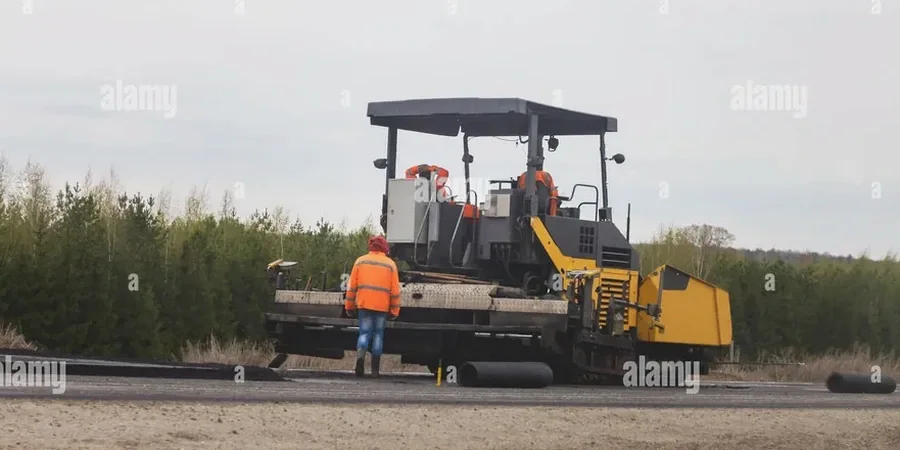
Local geotechnical conditions in Santa Clarita
Much of Santa Clarita is underlain by young alluvium and colluvium, with pockets of expansive clay that can heave when moisture fluctuates. That subgrade behavior directly threatens flexible pavement performance. If the design treats the entire alignment as uniform, you get differential deformation within the first two wet seasons. The city's own General Plan Safety Element notes the presence of liquefiable sediments in parts of the valley—a reminder that pavement support can shift even without a major earthquake. We've seen projects where the asphalt thickness was adequate on paper but the base course failed because the drainage layer wasn't graded to handle the intense rainfall bursts common in the Santa Clara River watershed. A flexible pavement design here has to account for both the surface material and what's happening two feet below the subbase.
Our services
We carry out the full pavement design package, from subgrade investigation to final structural section recommendations. Every deliverable is reviewed by engineers who know Santa Clarita's geotechnical landscape firsthand.
Comprehensive Flexible Pavement Design
Full structural section design including traffic analysis, subgrade evaluation, material characterization, and layer thickness optimization for new roads, parking lots, and rehabilitation projects throughout Santa Clarita.
Pavement Evaluation and Rehabilitation
Condition surveys, deflection testing, and forensic analysis to diagnose existing pavement distress and design effective overlays or reconstruction strategies that match the projected traffic and climate demands.
Questions and answers
How much does a flexible pavement design cost for a project in Santa Clarita?
The fee typically ranges from US$1,740 to US$5,070 depending on project size, traffic data complexity, and the number of soil borings needed for subgrade characterization. A small commercial parking lot will fall on the lower end, while a multi-lane arterial road with detailed mechanistic analysis will be higher. We carry out a fixed-price proposal after reviewing the project scope and location.
What makes Santa Clarita's subgrade different from other Southern California cities?
The city sits on a mix of alluvial fan deposits from the Santa Clara River and its tributaries, plus colluvium along the foothills. This creates abrupt changes in soil stiffness over short distances, and some areas have expansive clay that reacts to seasonal moisture. A design that works in the San Fernando Valley often needs recalibration here to handle these transitions.
How do you determine the right asphalt thickness?
We start with a geotechnical investigation to measure subgrade strength—typically resilient modulus or CBR—then run traffic projections in equivalent single axle loads. Using AASHTO or mechanistic-empirical methods, we calculate the structural number required and distribute it across the asphalt, base, and subbase layers based on material properties and drainage conditions.
How long does the design process take?
From field investigation to final stamped report, most Santa Clarita projects take two to three weeks. The field work and lab testing consume the bulk of that time, with the analytical design completed in about a week once all inputs are ready. We can expedite for tight construction schedules when needed. More info.