Santa Clarita’s population has pushed past 225,000, and with that growth comes construction on the valley’s deep alluvial deposits. The 1994 Northridge earthquake reminded everyone here that soft soil amplifies motion—and amplifies risk. When standard shallow footings hit compressible layers, stone column design becomes the practical path forward. Our technical team runs the numbers so each column layout handles the expected settlement and lateral loads. We do not guess at diameters or spacing. The work references the site-specific shear strength data that defines how the ground under Santa Clarita behaves, not generic textbook assumptions. In projects where the granular fill needs tight gradation control, the grain size analysis supports the specification before the first vibroflot goes in the ground.
A stone column is only as reliable as the soil it displaces. In Santa Clarita, we design the composite block, not just the column.
Technical details of the service in Santa Clarita
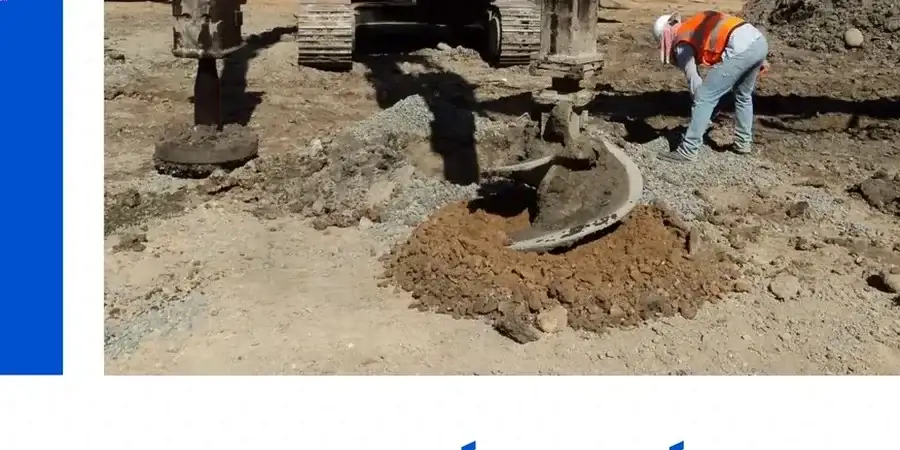
Local geotechnical conditions in Santa Clarita
A 2023 warehouse expansion off Highway 126 ran into trouble when the original geotech report recommended stone columns but the layout was copied from a project in the Mojave. The Santa Clarita alluvium was softer, the groundwater higher. Within six months, the slab showed differential settlement exceeding an inch. The fix cost more than the original ground improvement budget. When stone column design ignores the fines content and the compressibility of the inter-column soil, the composite system fails. The columns punch through the weak layer or the surface mat transfers load unevenly. In seismic events, undrained cyclic loading can close the column if the confinement stress is miscalculated. Our approach models the post-improvement modulus with actual consolidation data from the site, not regional averages. We also run a liquefaction triggering analysis per Idriss and Boulanger when the groundwater table sits within 40 feet of the surface, because liquefaction mitigation is often the unspoken driver behind a stone column specification in the Santa Clarita Valley.
Our services
Stone column design in Santa Clarita splits into two distinct service tracks. The first covers new-building ground improvement where settlement control governs. The second covers seismic retrofit and liquefaction mitigation where pore pressure dissipation is the priority. Both start with a site-specific design package, not a template.
Settlement Control Design
We develop column layouts for slabs, embankments, and lightly loaded footings on compressible Santa Clarita alluvium. The deliverables include the area replacement ratio, column grid spacing, stone specification, and a load test program to confirm the design modulus before structural concrete is placed.
Liquefaction Mitigation Design
For sites with high groundwater and loose saturated sands, we design stone columns as drains and densification elements. The analysis runs a post-improvement factor of safety against liquefaction, estimates excess pore pressure dissipation time, and produces a column pattern that meets the IBC performance objective for the design earthquake.
Questions and answers
What does stone column design cost in Santa Clarita?
Design fees typically range from US$1,660 to US$5,790, depending on the treated area, number of borings, and whether liquefaction analysis is required. A small commercial pad with two borings sits at the lower end. A multi-acre industrial site with CPT calibration and time-history settlement runs pushes toward the upper bound.
How deep do stone columns need to go in Santa Clarita?
Depth depends entirely on the boring logs. In the Santa Clarita Valley, competent bearing often appears between 20 and 35 feet, but we have designed columns to 45 feet where the alluvium runs deeper near the Santa Clara River channel. The column must penetrate the compressible layer and seat into a stratum with sufficient blow count to resist bulging.
Which soil types in Santa Clarita benefit most from stone columns?
Loose silty sands and soft sandy silts with fines content below 20 percent respond best. The Santa Clarita alluvium often falls into that window. When fines exceed 25 percent, the drainage function slows and we reassess whether vibro-replacement or a rigid inclusion makes more sense. We always run a grain size curve before committing to the design approach.